

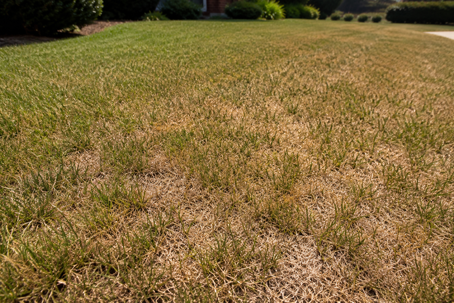
Is Your Lawn Brown from the Drought? Here's How to Tell if It's Stressed or in Trouble
If your lawn has turned brown over the past several weeks, you're not alone. The ongoing drought and prolonged periods of high temperatures have left many homeowners wondering whether their grass is dead or simply struggling to survive.
The good news is that a brown lawn doesn't always mean it's beyond saving. Many warm-season grasses naturally go dormant during extended droughts as a way to conserve moisture. However, drought stress can also create the perfect conditions for insects, disease, and permanent turf damage if left untreated.
Understanding the difference can help you take the right steps to protect your lawn.
Why Drought Causes Lawns to Turn Brown
Grass requires moisture to stay healthy and actively grow. During periods of little rainfall and extreme heat, your lawn begins conserving energy by slowing its growth and entering dormancy. This natural defense mechanism allows the grass to survive until rainfall returns.
Warm-season grasses commonly found in our area, such as St. Augustine, Bermuda, and Zoysia, can withstand periods of drought, but prolonged stress without adequate moisture can weaken the turf and make it more susceptible to additional problems.
Signs Your Lawn Is Simply Dormant
Dormant grass often appears:
- Light brown or tan across large sections of the lawn
- Evenly discolored rather than scattered in irregular patches
- Firmly rooted when gently pulled
- Free from visible insect or disease damage
Although dormant grass may not look attractive, it is still alive and often recovers once consistent rainfall or irrigation resumes.
When Brown Grass May Be Something More
Not every brown lawn is suffering from drought alone.
Dry conditions place additional stress on turf, making it easier for pests and diseases to take hold. If you notice any of the following, your lawn may need professional attention:
- Irregular patches that continue to expand
- Grass that pulls up easily from the soil
- Areas that don't improve after watering
- Signs of chinch bugs or other lawn insects
- Fungal diseases developing around stressed areas
Early diagnosis is important because insect and disease damage can continue even after drought conditions improve.
Tips to Help Your Lawn Survive the Drought
While no one can control the weather, there are several ways to reduce stress on your lawn during dry conditions.
Water Deeply and Infrequently
When local watering restrictions allow, provide approximately one inch of water per week. Deep watering encourages stronger root systems than frequent, shallow watering.
Raise Your Mowing Height
Taller grass shades the soil, helping retain moisture and reducing heat stress. Avoid removing more than one-third of the grass blade during each mowing.
Limit Traffic
Dry grass is more susceptible to damage from foot traffic, lawn equipment, and pets. Try to avoid unnecessary wear until conditions improve.
Skip Heavy Fertilization
Applying fertilizer during severe drought can place additional stress on already struggling turf. Wait until the lawn begins actively growing again before resuming a regular fertilization schedule.
Watch for Insects and Disease
Drought-stressed lawns are more vulnerable to pests like chinch bugs and certain turf diseases. Regular inspections can help identify problems before they spread.
When to Schedule a Lawn Inspection
If your lawn remains brown after receiving adequate water, develops irregular dead patches, or shows signs of insect activity, it's a good idea to have it evaluated by a lawn care professional.
Many lawn issues look similar from a distance, but the treatment for drought stress is very different from the treatment for insects or disease. A professional inspection can identify the underlying cause and recommend the most effective solution.
Protect Your Lawn Through the Summer
The current drought has been challenging for lawns throughout our community, but early action can make a significant difference in your lawn's recovery. Proper watering, mowing practices, and routine inspections will help your turf withstand stressful conditions and bounce back when rainfall returns.
If you're unsure whether your lawn is simply dormant or experiencing a more serious issue, Westfall's Pest Control is here to help. Our experienced lawn care specialists can evaluate your property, identify the cause of the damage, and recommend the best treatment plan to restore your lawn's health.
Contact Westfall's Pest Control today to schedule your lawn evaluation and keep your yard looking its best all season long.