

Millipedes and Centipedes Around the Home: What Florida Homeowners Need to Know
If you've started noticing long, many-legged creatures crawling around your home, you're not alone. During Florida's warm, humid weather—especially after periods of heavy rain—millipedes and centipedes become much more active. While they may look similar at first glance, these two pests have very different habits and require different approaches to management.
Understanding why they appear around your property and what attracts them can help you reduce their numbers and keep them from making their way indoors.
Millipedes vs. Centipedes: What's the Difference?
Although they are often confused with one another, millipedes and centipedes are very different.
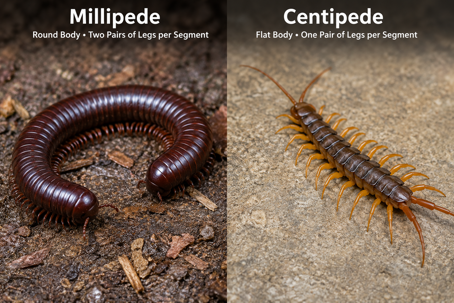
Millipedes have rounded bodies with two pairs of legs per body segment. They move slowly and curl into a tight spiral when disturbed. Millipedes feed primarily on decaying leaves, mulch, and other organic matter, making them beneficial decomposers in nature.
Centipedes, on the other hand, have flatter bodies with one pair of legs per body segment. They move quickly and are active predators that feed on insects such as ants, spiders, cockroaches, silverfish, and other household pests. Their speed and appearance can make them startling to encounter indoors.
Why Are They Around Your Home?
Both millipedes and centipedes thrive in damp, shaded environments. Florida's frequent summer rainstorms create ideal conditions for them to become active.
Common hiding places include:
- Mulch beds
- Leaf litter
- Wood piles
- Landscape edging
- Under rocks and pavers
- Dense ground cover
- Moist crawl spaces
- Areas around irrigation systems
After heavy rainfall, saturated soil often forces these pests to move to higher, drier ground. This is why homeowners frequently see them crawling across driveways, patios, lanais, garages, and occasionally inside the home.
Should You Be Concerned?
Millipedes are generally harmless to people and pets. They do not bite or sting, but some species can release a mild defensive fluid that may cause minor skin irritation if handled.
Centipedes are also beneficial because they feed on other insects. However, larger species can deliver a painful bite if handled or threatened. While bites are uncommon and usually not dangerous, they can be uncomfortable.
Finding a few outdoors is normal. However, seeing them indoors on a regular basis often indicates excess moisture or favorable conditions around your home's foundation.
How to Reduce Millipede and Centipede Activity
A few simple changes around your property can make your home much less inviting:
- Remove excess leaf litter and yard debris.
- Avoid allowing mulch to accumulate directly against the foundation.
- Trim shrubs and landscape plants away from the home to improve airflow.
- Repair leaking irrigation heads and outdoor faucets.
- Reduce standing water around the property.
- Seal cracks and gaps around doors, windows, utility penetrations, and the foundation.
- Keep garages, storage areas, and crawl spaces as dry as possible.
Because these pests depend heavily on moisture, reducing damp conditions is one of the most effective long-term solutions.
Professional Pest Control Makes the Difference
If millipedes or centipedes continue to appear despite making environmental changes, professional treatment can help reduce activity around your home's exterior before these pests make their way inside.
At Westfall's Pest Control, our technicians inspect your property to identify moisture-prone areas, entry points, and conditions that attract these pests. We then apply targeted exterior treatments as part of a comprehensive pest management program designed to create a protective barrier around your home.
Our goal isn't just to eliminate the pests you see today—it's to help prevent future invasions by addressing the conditions that allow them to thrive.
Protect Your Home This Season
Florida's warm temperatures and frequent summer storms create perfect conditions for millipedes and centipedes to become active. While occasional sightings are common, repeated activity around your home may indicate it's time for professional attention.
If you're seeing millipedes or centipedes around your property, let the experts at Westfall's Pest Control help. Our experienced team can identify the source of the problem and provide effective solutions to keep your home protected year-round.
Contact Westfall's Pest Control today at 941-761-0125 or visit www.westfallspestcontrol.com to schedule your inspection.