Lawn Pest Control for Manatee and Sarasota County Lawns
How to Tell What Is Eating Your Lawn
A dying patch in a Florida lawn has a short list of likely causes, and each one needs a different treatment applied at a different time. Treating for the wrong insect does not just waste an application, it wastes the window when the right treatment would have worked.
Here is how to narrow it down before you call anyone.
Start with a simple question: does the grass die, or does it look chewed? Chinch bugs and grubs kill the plant, so the area goes brown and stays brown no matter how much you water it. Sod webworms and armyworms eat the blade and leave the plant alive, so the lawn looks ragged and scalped rather than dead. That one distinction rules out half the list.
Chinch Bugs
Southern chinch bugs are the leading cause of St. Augustine grass loss in Manatee and Sarasota counties, and they are the first thing we check on any brown patch.
They are small, about an eighth of an inch, black with white wing patches, and they cluster at the edge of the damaged area rather than in the dead center. They feed by piercing the blade and injecting a toxin, so the grass dies rather than being chewed.
Where to look: the hottest, driest, sunniest part of the lawn. Along a driveway, next to a sidewalk, against a south-facing wall, anywhere reflected heat builds up. They almost never start in the shade.
What it looks like: an irregular yellow to straw-brown area that expands outward and does not recover after watering. The grass at the edge is yellowing while the center is already dead.
When: they are active most of the year here and peak in the heat, but populations that survive fall are what start next spring's damage, which is why fall treatment matters more than most people realize.
Mole Crickets
Mole crickets are the Bahia grass problem, though they will work St. Augustine and Zoysia too. They tunnel just below the surface, feeding on roots and separating the grass from the soil as they go.
Where to look: open sunny turf, often the front lawn and the strip near the street. They prefer sandy soil, which describes most of this county.
What it looks like: the surface feels spongy underfoot and the grass thins without an obvious pattern. You will see small raised tunnels like miniature mole runs, and loose soil pushed up at the surface. Damage often looks worse in the morning, since they tunnel at night.
The soap flush test: mix two tablespoons of dish soap into two gallons of water and pour it over a two-foot square of suspicious turf. Mole crickets come to the surface within two or three minutes. More than two or three in that square means a treatable population.
When: timing is the whole game with mole crickets. They are far easier to control as small nymphs in early summer than as adults. Fall treatment targets the adults before they overwinter and lay next year's eggs.
Tropical Sod Webworms
This is the fall problem, and it moves fast. The caterpillars feed at night from late summer through November and can noticeably thin a lawn in about a week.
Where to look: anywhere, but damage often appears first in the shadier, more humid parts of the lawn.
What it looks like: the lawn looks like someone mowed it too short in patches. The blades are notched and chewed on the edges rather than dead. The plant survives. Look for small green pellets of frass down at the soil line, and for small tan moths flying up in a zigzag when you walk the lawn at dusk. The moths do not feed. They are laying.
When: September through November is the peak in this area, which is exactly when most homeowners stop watching the lawn.
Fall Armyworms
Armyworms get their name from how they move. They arrive in numbers and advance across a lawn in a front, so the damage looks like a line moving through the grass rather than a patch appearing in one place.
Where to look: they start wherever the moths landed, often the edge of the lawn nearest open ground or a field, then work inward.
What it looks like: the lawn appears to be shrinking from one side. Look closely at the blades in the advancing edge and you will see them chewed down to the stem. Birds working an area hard is a reliable tell, because they are eating the caterpillars.
When: late summer into fall, and they move fast. An armyworm front can cross a lawn in a matter of days, which is why this is one of the few lawn pests worth treating the same week you spot it rather than at the next scheduled visit.
Call us if you think you have them. We would rather come out and tell you it is something else than arrive a week later.
White Grubs
Grubs are beetle larvae living in the soil, feeding on roots. They are the other cause of grass that lifts away with no resistance, which is why they get confused with mole crickets.
Where to look: anywhere, though damage often shows first in sunnier areas where the turf is already under stress.
What it looks like: irregular brown patches that do not respond to watering, and turf that peels back like carpet when you pull it. Dig two or three inches into the soil at the edge of the damage and you will find C-shaped white larvae if they are the cause. More than five or six in a square foot is a treatable population.
The other tell is what else shows up. Armadillos rooting through the lawn at night and leaving the ground turned over are usually digging for grubs. If you have an armadillo problem, you very likely have a grub problem underneath it.
When: treatment works best on young grubs feeding near the surface. Older grubs go deeper and are much harder to reach, which is another reason timing matters more than product.
The Pull Test: A Two Minute Way to Narrow It Down
Grab a handful of grass at the edge of the damaged area, where the yellowing meets the green, and pull straight up with steady pressure.
If it holds firm, the roots are intact. The problem is above ground: chinch bugs, disease or drought stress.
If it lifts away like a loose piece of carpet with no root resistance, something has eaten the roots. That is grubs or mole crickets.
Now look at what came up. Chewed and notched blades with the plant still alive means caterpillars, so sod webworms or armyworms. Blades that are dead but intact means chinch bugs or disease. Rotted blade bases that pull apart easily means fungus rather than insects.
This will not give you a definitive answer, but it will tell you which half of the list you are in, and it will tell you whether the problem is urgent. If the grass lifts away in sheets, it is urgent.
Our Process Keeps Your Property Healthy And Beautiful
-
FertilizationWhen you need lawn fertilizing services in West Florida or the surrounding areas, you can rely on the experienced and professional team at Westfall's Lawn and Pest. -
Shrub & OrnamentalWestfall's Lawn Care and Pest Control offers comprehensive shrub and tree services to make sure that you never have to worry about your outdoor spaces again. -
Tree InjectionsOur tree injection services are a fast, effective way to protect your trees while preserving their natural beauty. We offer a comprehensive process that includes a pest inspection and treatment plan.
How We Treat Lawn Pests
Every visit starts with an inspection, because treating the wrong insect wastes the application and the window.
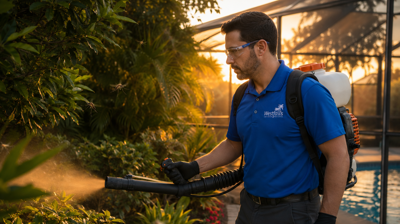
Your technician walks the lawn and looks at the pattern of the damage, checks the edges of the affected areas where the insects actually are rather than the dead center where they have already moved on, and runs a soap flush or a pull test if the situation is ambiguous. Then they tell you what they found.
Treatment is targeted to the pest and to its stage. Surface feeders like chinch bugs and sod webworms need the product in the thatch layer where they live, so a heavy thatch layer sometimes has to be dealt with first. Root feeders like grubs and mole crickets need the product carried down into the soil, which means watering it in properly. Getting that step wrong is why so many store-bought applications do nothing.
For customers on a program, we treat preventively at the points in the year when each pest is vulnerable rather than waiting for damage. That is cheaper than repairing a lawn and it is the main reason a program beats calling someone after the fact.
We also tell you what is not an insect problem. A good share of the lawns we are called out to look at have a disease, a watering problem or a soil problem, and no insecticide will fix any of those. You will get a straight answer either way.
Why Timing Matters More Than Product
Most lawn insect treatments available to homeowners will kill the target insect. The reason store-bought applications so often fail here is not the product. It is that the application happened at the wrong point in the insect's life cycle, or the water it needed to reach the root zone never followed it.
Mole crickets are a clear example. An application that works well on small nymphs in June barely dents the same population as armored adults in October, and the adult treatment has to be watered in to reach where they live. Grub treatments have a similar window. Chinch bugs need the treatment to reach the thatch layer where they actually sit, which means a heavy thatch layer can block the product entirely regardless of how much you apply.
That is what a program buys you: someone watching the calendar and the lawn together, so the application lands when the insect is vulnerable rather than when you happened to notice the damage.
Call (941) 231-7285 for a free lawn inspection and we will tell you what you have and when it should be treated.
Lawn Pest Control Questions, Answered
How do I know if it is bugs or a disease?
Pull a handful of grass at the edge of the damage. If the blades are chewed or notched and the plant is alive, it is caterpillars. If the grass is dead but the blades are intact, it is chinch bugs or disease. If it lifts away with no root resistance, it is grubs or mole crickets. If the blade bases look rotted and pull apart easily, it is fungus. We confirm on site before treating.
Will the grass grow back?
Usually, if the plant survived. Sod webworm and armyworm damage is chewing, so the grass recovers once the insects are gone and it is fed. Chinch bug and grub damage kills the plant, so the area has to fill back in from the runners around it, which takes weeks in the growing season and longer in winter. Badly damaged areas sometimes need re-sodding, and we will tell you honestly if that is where you are.
Why did the treatment I bought at the store not work?
Usually timing or water, not the product. Most retail products will kill the target insect if they reach it. Grub and mole cricket treatments have to be watered in to reach the root zone, and if that does not happen the product sits on top of the soil. Insects also have windows when they are vulnerable and windows when they are not. A treatment that works well on young mole cricket nymphs in June barely dents the same population as adults in October.
How often do you treat?
Programs run on a schedule built around when each pest is actually vulnerable, not on a fixed calendar. In practice that means several visits through the year with the timing set by the season and by what we found on your lawn last time.
Is it safe around pets and kids?
Yes. We use environmentally responsible products applied to targeted areas. If a product needs time to dry before anyone walks on it, the technician tells you how long before they leave.
I have armadillos digging up the lawn. Is that related?
Almost certainly. Armadillos dig for grubs and other soil insects. Treating the grubs removes the reason they are visiting. Handling the armadillo without handling the grubs usually means another one turns up.
Do you do this in my area?
We cover Manatee and Sarasota counties and parts of Hillsborough and Charlotte, including Bradenton, Sarasota, Palmetto, Parrish, Lakewood Ranch, Ellenton, Venice, North Port, Englewood and the island communities.
Get a Free Lawn Inspection
If your lawn has a patch that is spreading, thinning, or turning brown in a way watering does not fix, we will come out and identify what is causing it. The inspection costs nothing and there is no obligation.
You get a straight answer about what you have, whether it needs treating, and when. Sometimes the answer is that it does not need treating at all.
Call (941) 231-7285 or request a free lawn inspection online.